Square Foot Garden Planner
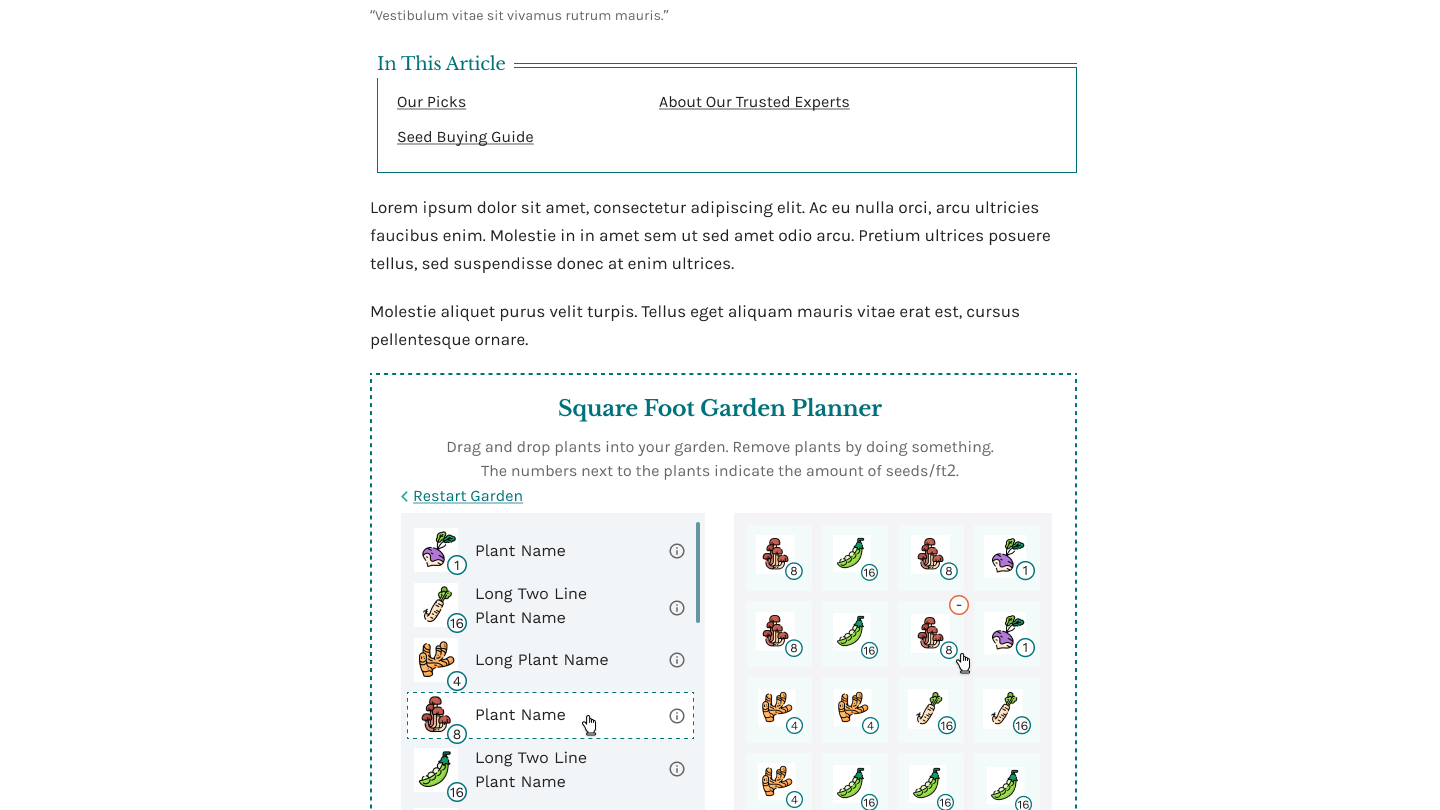
A personal project exploring plant spacing visualization and garden planning interactions. Built to help gardeners plan their square foot gardens with proper spacing.
Grid System
Square foot grid for precise plant spacing
Plant Library
Curated plant database with spacing guides
Drag & Drop
Intuitive plant placement interactions
Visual Planning
Color-coded visualization of garden layout
Project Overview
The Square Foot Garden Planner is a personal project born from my interest in gardening and the need for better planning tools. The square foot gardening method divides a raised bed into 1-foot squares, each planted with a different crop based on its spacing requirements.
This tool helps gardeners visualize their garden layout, understand plant spacing requirements, and maximize their growing space efficiently.
Key Features
Drag & Drop Garden Planning
Intuitive drag and drop interface for placing plants into your garden grid. Plants automatically show the correct number of plantings based on their spacing requirements (1, 2, 4, 9, or 16 per square foot).
Plant Library
Curated database of common garden vegetables, herbs, and flowers with their proper spacing requirements. Users can search and filter plants to find what they want to grow.
Visual Feedback
Color-coded plant icons help users quickly identify different crops in their garden plan. The visual approach makes it easy to ensure variety and proper spacing at a glance.
Design Principles
As a personal project, I had the freedom to explore design decisions that prioritized simplicity and delight:
- Clean, minimal interface that puts focus on the garden grid
- Playful plant illustrations that make planning enjoyable
- Responsive design for planning on any device
- Instant visual feedback when placing plants
Learnings
This project was a great opportunity to explore interaction design patterns for spatial planning tools. Working on something I personally cared about helped me understand the importance of domain expertise in design—the more you understand the problem space, the better solutions you can create.